The icontributetoml Platform
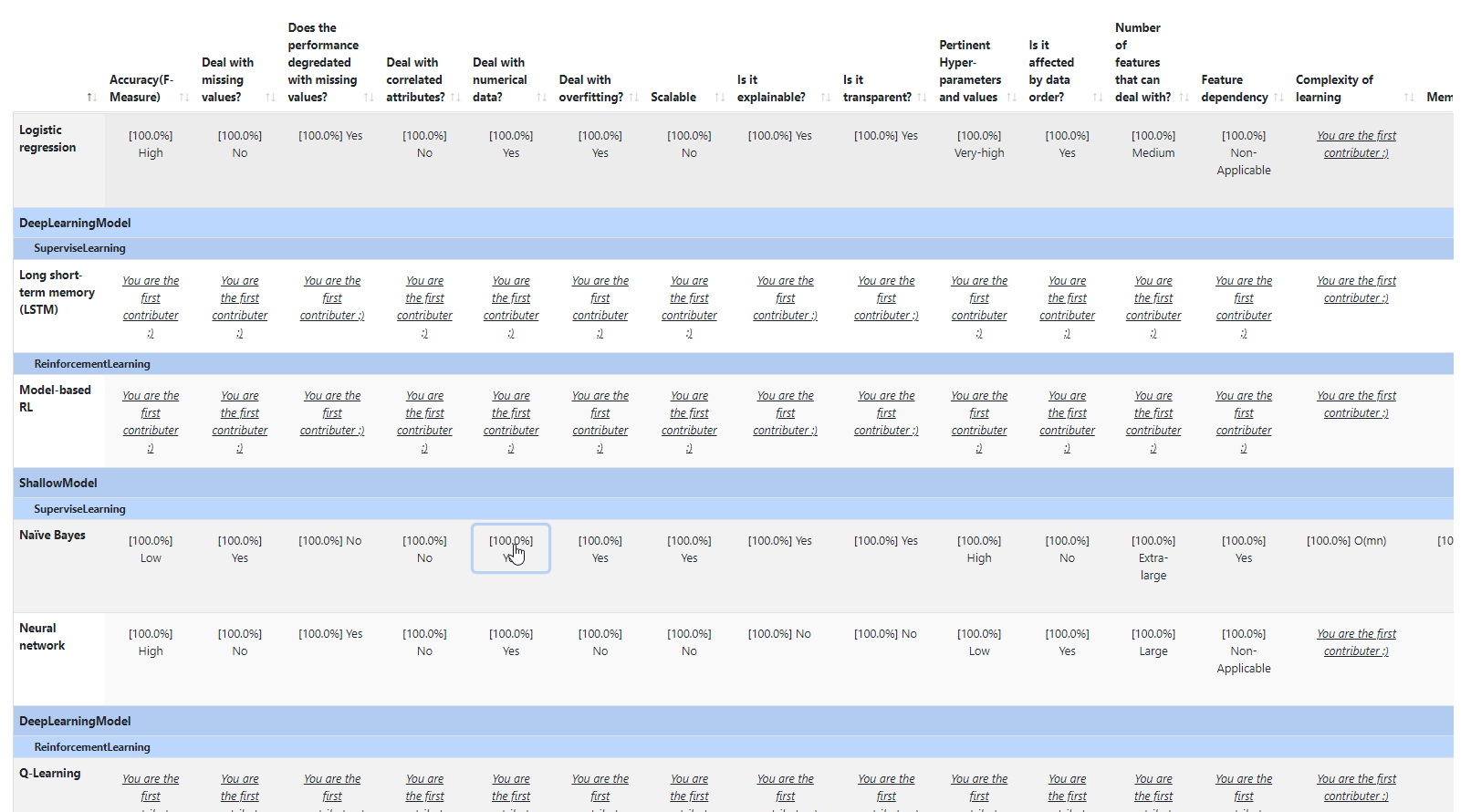
At a basic level, our 'consensual knowledge base' is a matrix, whose columns are algorithm properties, and whose rows are ML algorithms or algorithm families (see Taxonomy of ML algorithms). The 'cells' of the matrix have a complex structure: minimally, a collection of triplets
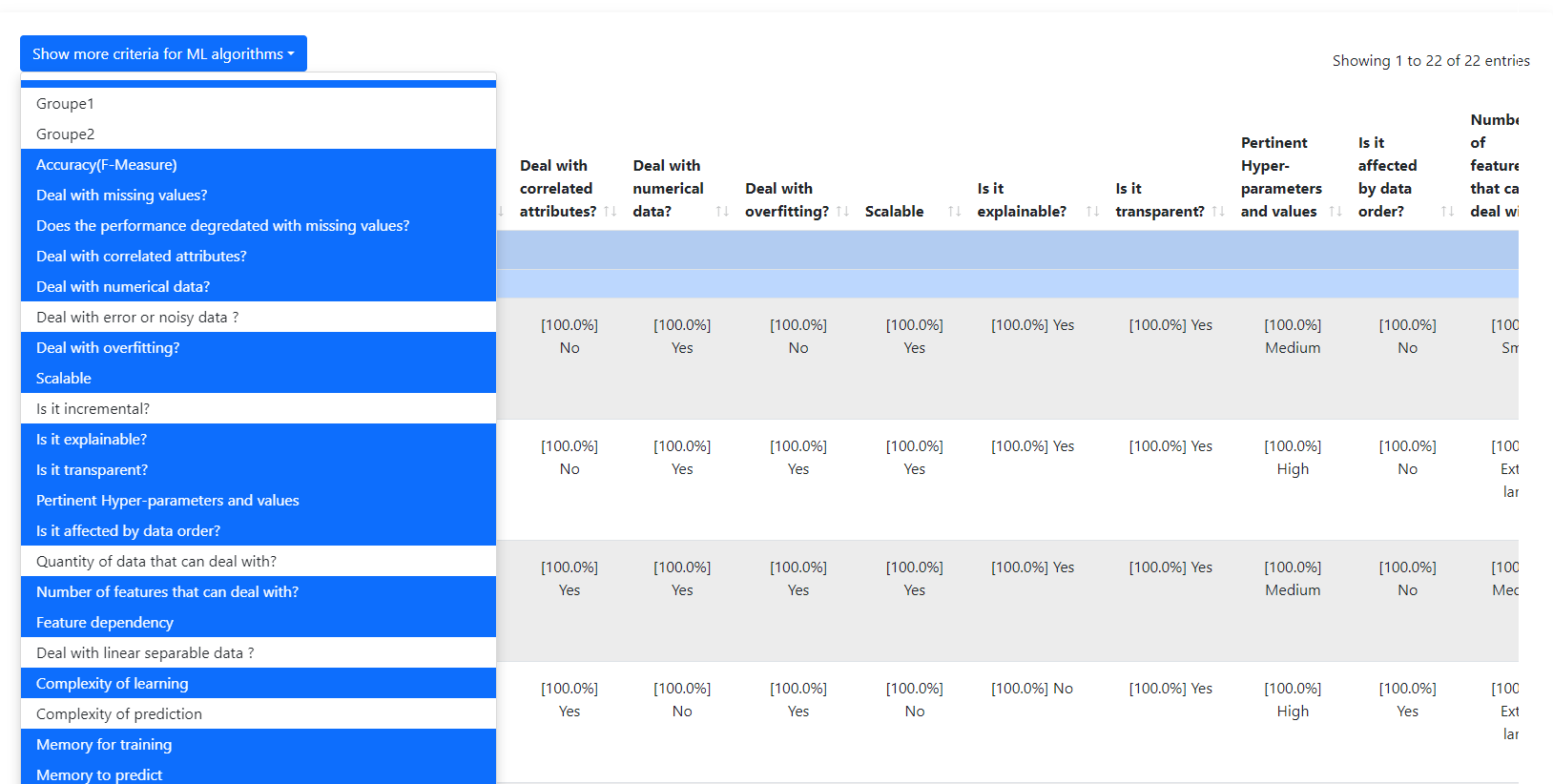
We considered many alternatives from Google docs or Office suite, to WIKIs and issue tracking tools. However, these tools lacked either the richness of the structure, or the necessary fine-grained editorial control over the contents of 'the matrix'. Thus, we developed our own web application. Figure 1 shows a screenshot from the home page of icontributetoml .
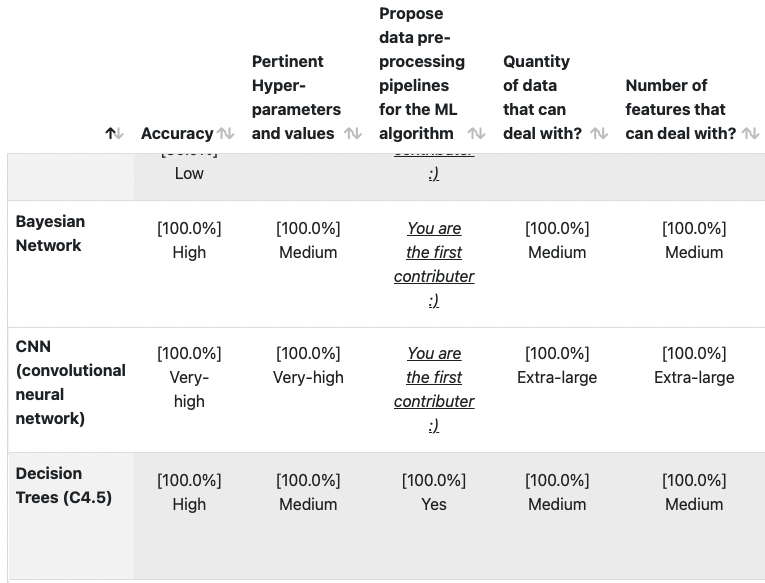
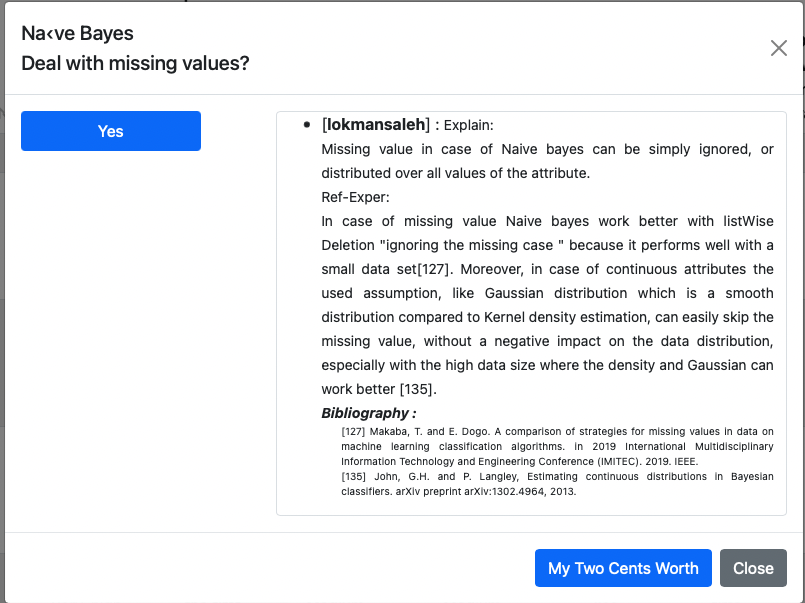
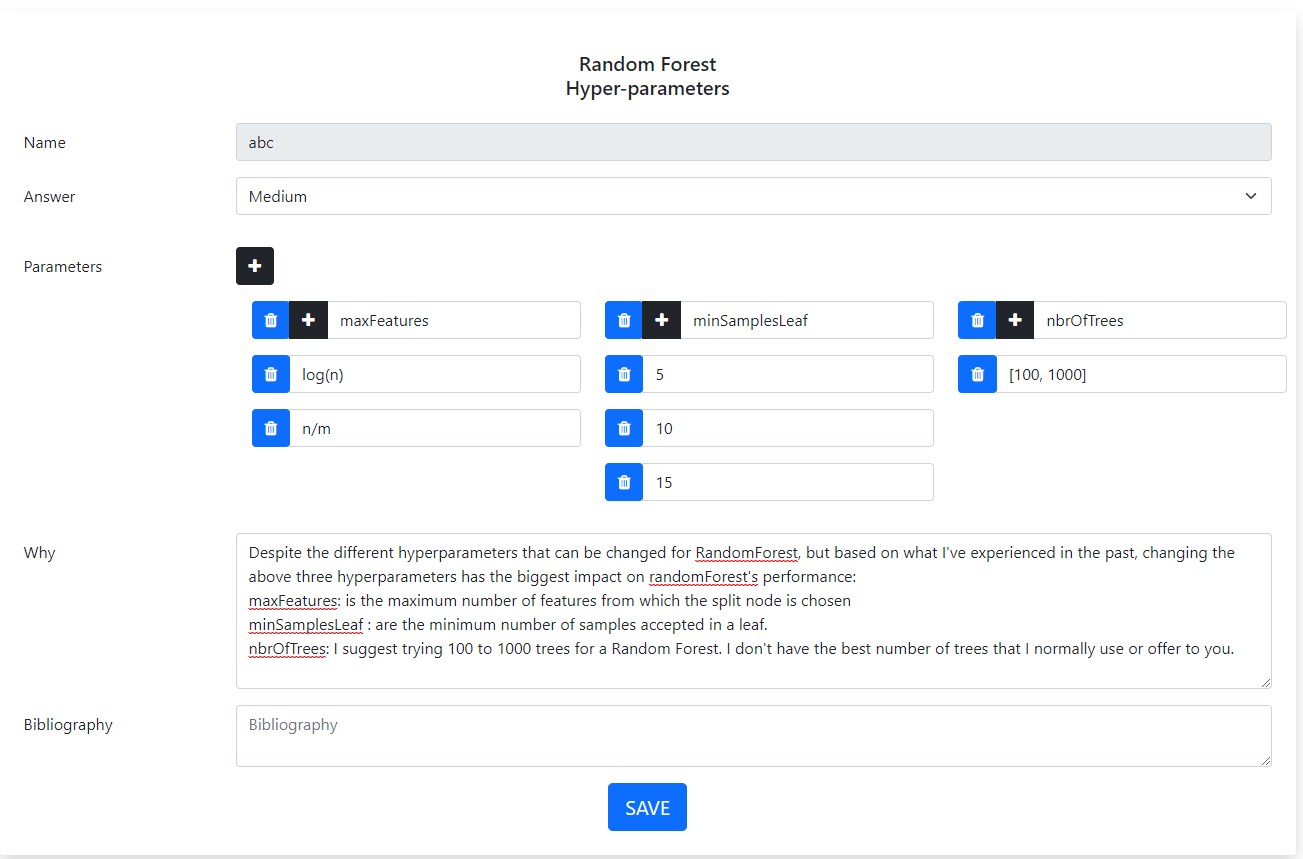
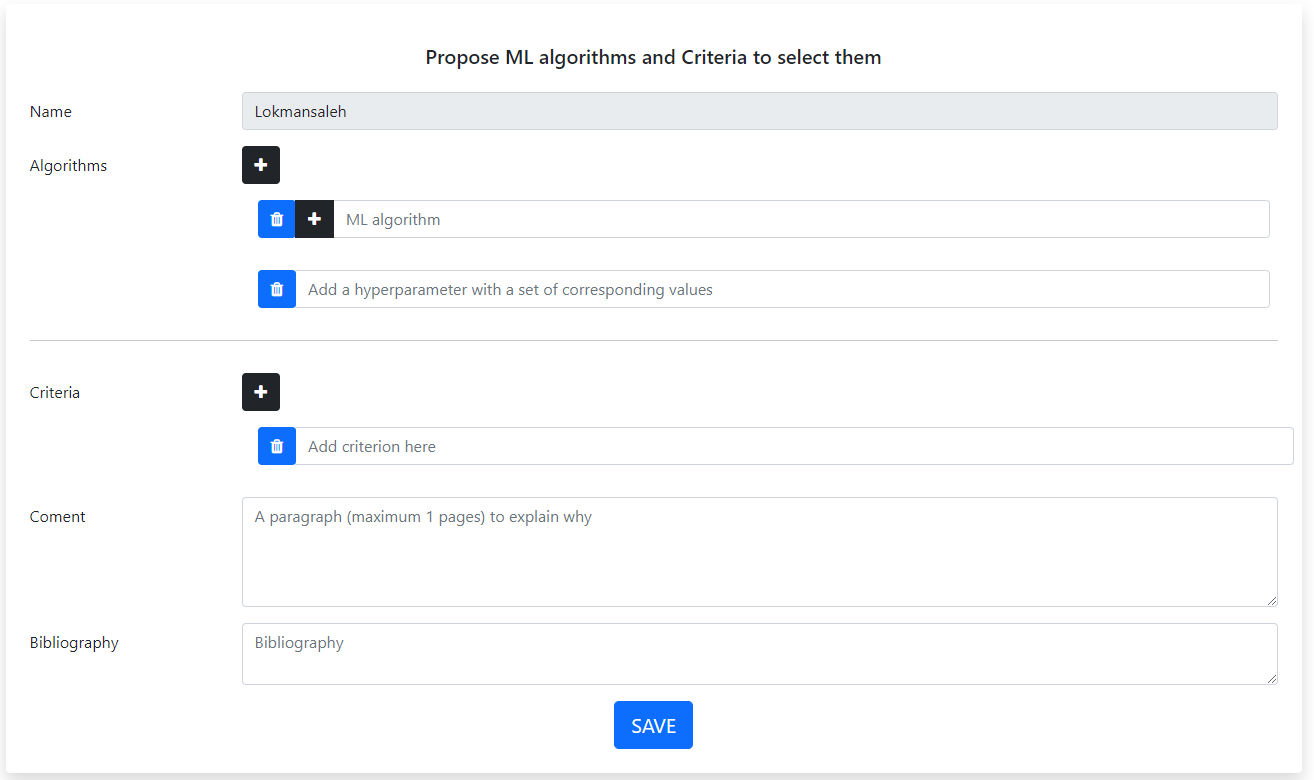
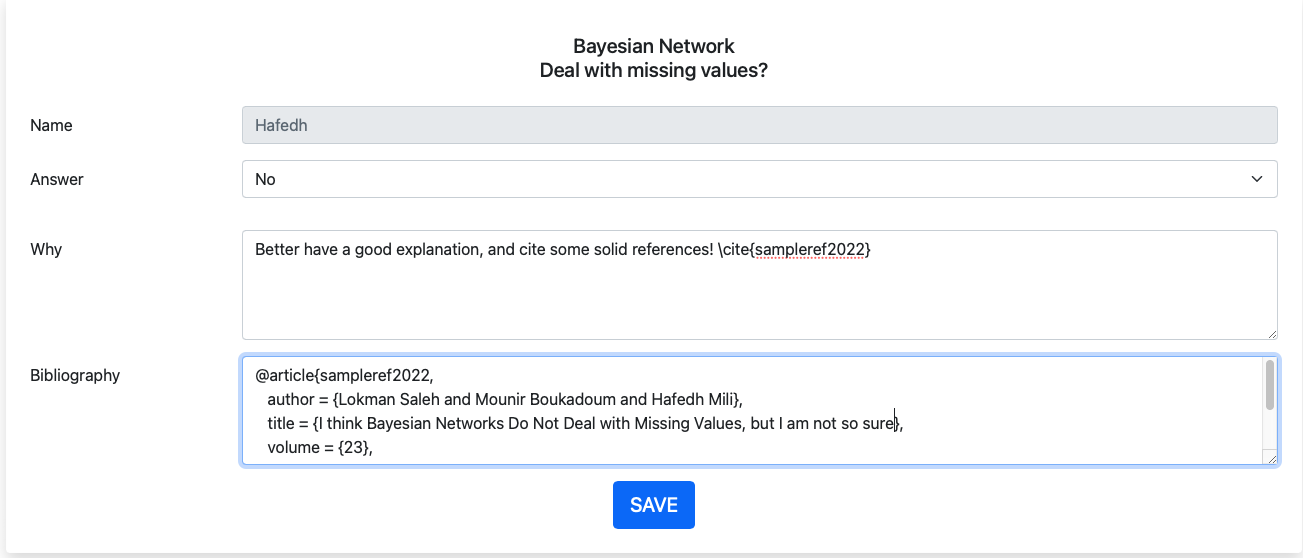
The matrix is accessible in a read-only fashion to all web users. Cells display property values, with their frequencies; when there is an agreement between the 'editors', a single value is shown with 100 % frequency. Selecting a cell displays the textual entries accompanying/justifying the values, along with any relevant bibliographic references (see Figure 2). If a user wishes to contribute, s/he can press the ' My Two Cents Worth ' button, which will enable them to propose a value of their own, and provide a justification for it. Doing so will ask the user to login, if they are not authenticated, and to register if they are not registered. Figure 3 shows the input form. Users enter their bibliographic references in a bibtex format, and can refer to them using the Latex cite{} command.
We are currently experimenting with more elaborate forms of ML knowledge input, trying out different input metaphors, and testing them on potential users. However, we have to be mindful of the fact that the typical user of our platform may not have the patience or incentive to contribute a very elaborate input.